



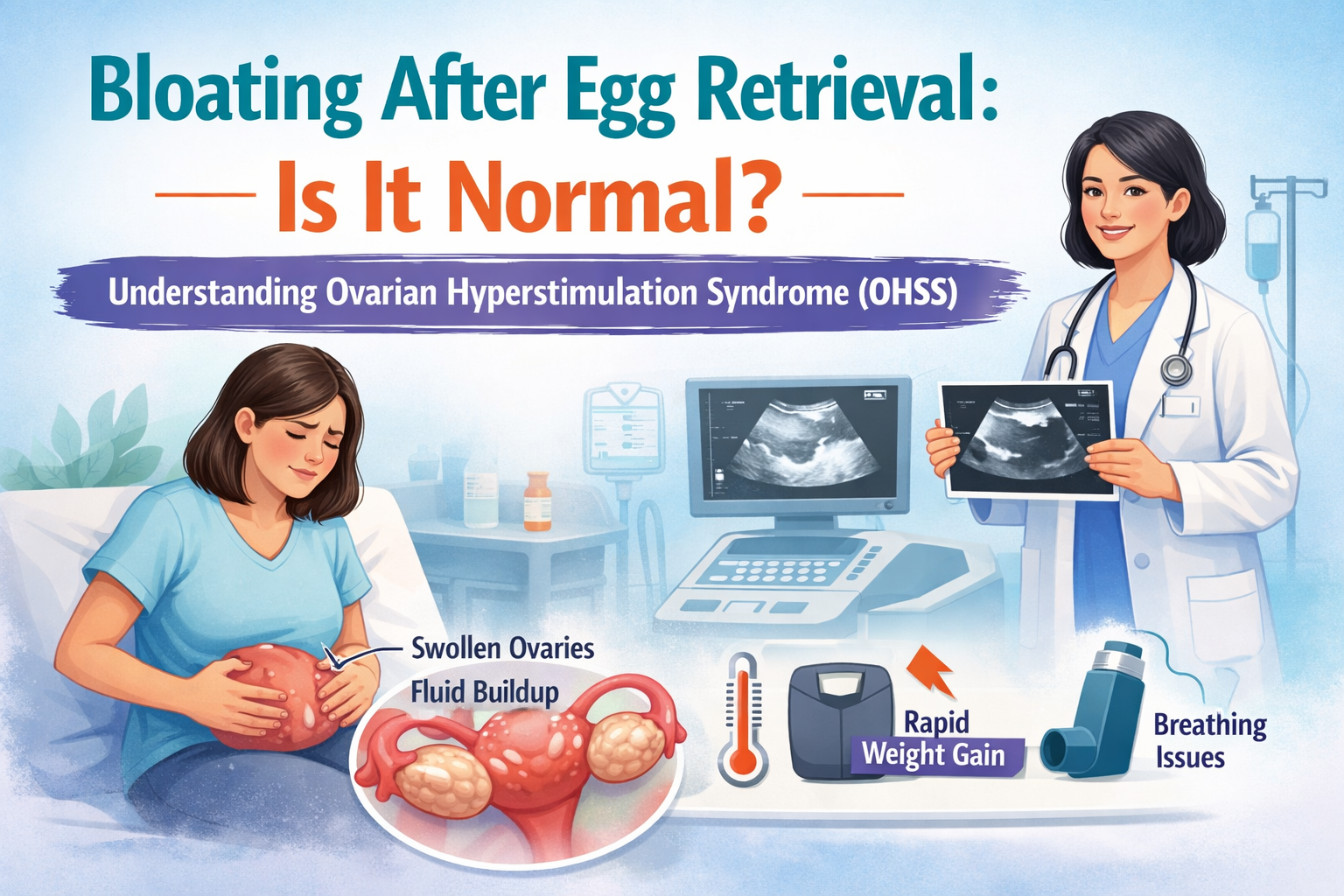
Introduction
If you're going through IVF, egg retrieval is one of the most important steps in the journey toward pregnancy. But many women feel worried when they experience bloating, abdominal discomfort, or swelling after the procedure.
You might find yourself wondering: Is this normal? Should I be concerned?
The short answer is yes—mild bloating after egg retrieval is common. Your ovaries have been stimulated to produce multiple eggs, and your body needs time to recover. However, sometimes the symptoms can be related to a condition called Ovarian Hyperstimulation Syndrome (OHSS).
Think of your ovaries like balloons that were gently inflated during IVF stimulation. After egg retrieval, they need time to slowly return to their normal size. During this process, some discomfort or bloating can occur.
In this article, we’ll explore why bloating happens after egg retrieval, what OHSS is, how to manage symptoms, and when to seek medical help.
Experiencing bloating after egg retrieval? Learn about OHSS symptoms, recovery tips, and when to consult the best ivf specialist in new delhi
1. Understanding Egg Retrieval in IVF
Egg retrieval is a minor surgical procedure performed during IVF to collect mature eggs from the ovaries.
During IVF treatment:
-
Hormone injections stimulate the ovaries
-
Multiple follicles grow
-
Eggs are collected using ultrasound guidance
The procedure usually takes 15–30 minutes, and most women go home the same day.
However, because the ovaries have been stimulated more than usual, they may temporarily become larger and sensitive, which leads to bloating.
2. Why Bloating Happens After Egg Retrieval
Bloating after egg retrieval is very common, and several factors contribute to it.
Ovarian Enlargement
Your ovaries produce multiple follicles during IVF. Even after egg retrieval, they remain enlarged for a few days.
Fluid Retention
Hormonal changes can cause fluid buildup in the abdomen, leading to a bloated feeling.
Minor Internal Irritation
The needle used during retrieval can cause slight irritation, which may lead to mild discomfort.
Most women describe the feeling as similar to menstrual bloating.
3. What Is Ovarian Hyperstimulation Syndrome (OHSS)?
Ovarian Hyperstimulation Syndrome (OHSS) is a condition where the ovaries overreact to fertility medications used during IVF.
This can cause:
-
Swollen ovaries
-
Fluid accumulation in the abdomen
-
Bloating and discomfort
In most cases, OHSS is mild and temporary. However, severe cases require medical attention.
Fortunately, with modern IVF protocols, serious OHSS has become much less common.
4. Mild vs Severe OHSS: What’s the Difference?
Not all OHSS cases are the same.
| Type | Symptoms | Severity |
|---|---|---|
| Mild OHSS | Bloating, mild pain, nausea | Common and manageable |
| Moderate OHSS | Noticeable swelling, vomiting | Needs monitoring |
| Severe OHSS | Rapid weight gain, severe pain, breathing issues | Requires medical care |
Most IVF patients experience mild symptoms that resolve on their own.
5. Common Symptoms of OHSS
Symptoms can vary depending on severity.
Typical Signs
-
Abdominal bloating
-
Mild pelvic pain
-
Nausea
-
Feeling full quickly
-
Slight weight gain
Warning Signs
Seek medical attention if you experience:
-
Severe abdominal pain
-
Rapid weight gain
-
Difficulty breathing
-
Reduced urination
-
Persistent vomiting
These symptoms may indicate severe OHSS.
6. Who Is at Higher Risk of OHSS?
Some women are more likely to develop OHSS during IVF.
Risk Factors Include
-
PCOS (Polycystic Ovary Syndrome)
-
Young age
-
High estrogen levels
-
Large number of follicles
-
Previous OHSS history
Women with PCOS often produce more follicles during stimulation, increasing risk.
An experienced fertility doctor monitors hormone levels carefully to prevent complications.
7. How Long Does Bloating Last After Egg Retrieval?
For most women:
-
Mild bloating lasts 3–5 days
-
Ovaries return to normal size within 1–2 weeks
If pregnancy occurs, symptoms may last slightly longer because pregnancy hormones can worsen OHSS.
However, symptoms gradually improve as the body recovers.
8. Tips to Reduce Bloating After Egg Retrieval
You can take several steps to feel more comfortable during recovery.
1. Stay Hydrated
Drink electrolyte fluids like:
-
Coconut water
-
Oral rehydration drinks
-
Water with lemon
2. Eat Light Meals
Choose foods that are easy to digest.
Examples include:
-
Soups
-
Yogurt
-
Fruits
-
Lean proteins
3. Increase Protein Intake
Protein helps maintain fluid balance in the body.
4. Gentle Movement
Light walking can help reduce bloating.
Avoid intense exercise for 7–10 days.
5. Wear Comfortable Clothing
Loose clothing reduces pressure on the abdomen.
9. When Should You Contact Your IVF Doctor?
Although mild bloating is normal, some symptoms should never be ignored.
Contact your doctor if you notice:
-
Severe abdominal swelling
-
Rapid weight gain (2 kg or more in 24 hours)
-
Difficulty breathing
-
Severe pain
-
Reduced urination
Prompt medical care can prevent complications.
10. Can OHSS Affect IVF Success Rates?
Interestingly, mild OHSS does not usually affect IVF success.
However, in severe cases, doctors may:
-
Freeze embryos
-
Delay embryo transfer
This approach protects the patient and improves chances of a healthy pregnancy later.
11. Preventing OHSS During IVF Treatment
Modern IVF techniques have significantly reduced OHSS risk.
Doctors may use:
-
Lower hormone doses
-
Trigger injections with safer medications
-
Freeze-all embryo strategies
-
Careful hormone monitoring
These strategies help keep the treatment safe and controlled.
12. Role of an Experienced IVF Specialist
Choosing the right fertility expert plays a major role in preventing complications.
An experienced doctor will:
-
Monitor hormone levels closely
-
Adjust medication doses
-
Identify early signs of OHSS
-
Provide personalized care
Many couples consult the best ivf specialist in new delhi to ensure safe treatment and better IVF outcomes.
Experienced specialists focus on both success rates and patient safety.
13. Recovery After Egg Retrieval: What to Expect
Most women recover quickly after egg retrieval.
Day 1–2
-
Mild cramps
-
Slight bloating
-
Fatigue
Day 3–5
-
Symptoms gradually improve
-
Energy levels return
After One Week
-
Ovaries begin returning to normal size
-
Bloating reduces significantly
Your doctor will usually schedule a follow-up consultation to monitor recovery.
14. Emotional Support During IVF Recovery
Physical symptoms are only one part of the IVF journey.
Emotionally, many women feel:
-
Anxious
-
Hopeful
-
Nervous about results
This is completely normal.
Talking with:
-
Your partner
-
Friends
-
Support groups
-
Fertility counselors
can make the process easier.
Remember, IVF is not just a medical journey—it’s an emotional one too.
Conclusion
Bloating after egg retrieval is a normal part of the IVF process for many women. In most cases, it happens because the ovaries are temporarily enlarged after stimulation.
While mild symptoms usually resolve within a few days, it’s important to stay aware of the signs of Ovarian Hyperstimulation Syndrome (OHSS).
The good news is that with modern fertility treatments and careful monitoring, serious OHSS is rare.
If you ever feel unsure about your symptoms, don’t hesitate to contact your fertility doctor. Consulting an experienced specialist—such as the best ivf specialist in new delhi—can ensure safe treatment and peace of mind throughout your IVF journey.
Your body has been through an important step in creating life. Give it time, care, and patience as it heals.
FAQs
1. Is bloating normal after egg retrieval?
Yes, mild bloating is common after egg retrieval because the ovaries remain enlarged due to stimulation medications.
2. How long does bloating last after egg retrieval?
Most women experience bloating for 3 to 5 days, although mild symptoms may last up to two weeks.
3. What are the first signs of OHSS?
Early symptoms include abdominal bloating, mild pain, nausea, and sudden weight gain.
4. Can OHSS go away on its own?
Yes, mild OHSS usually resolves naturally within one to two weeks with proper hydration and rest.
5. Should I worry about severe bloating after IVF?
Severe bloating, rapid weight gain, or breathing problems should be evaluated immediately by a fertility specialist.

 English
 Arabic
 French
 Spanish
 Portuguese
 Turkish
 Dutch
Dutch
 Italiano
 Russian
 Romaian
 Portuguese (Brazil)
 Greek
Greek