



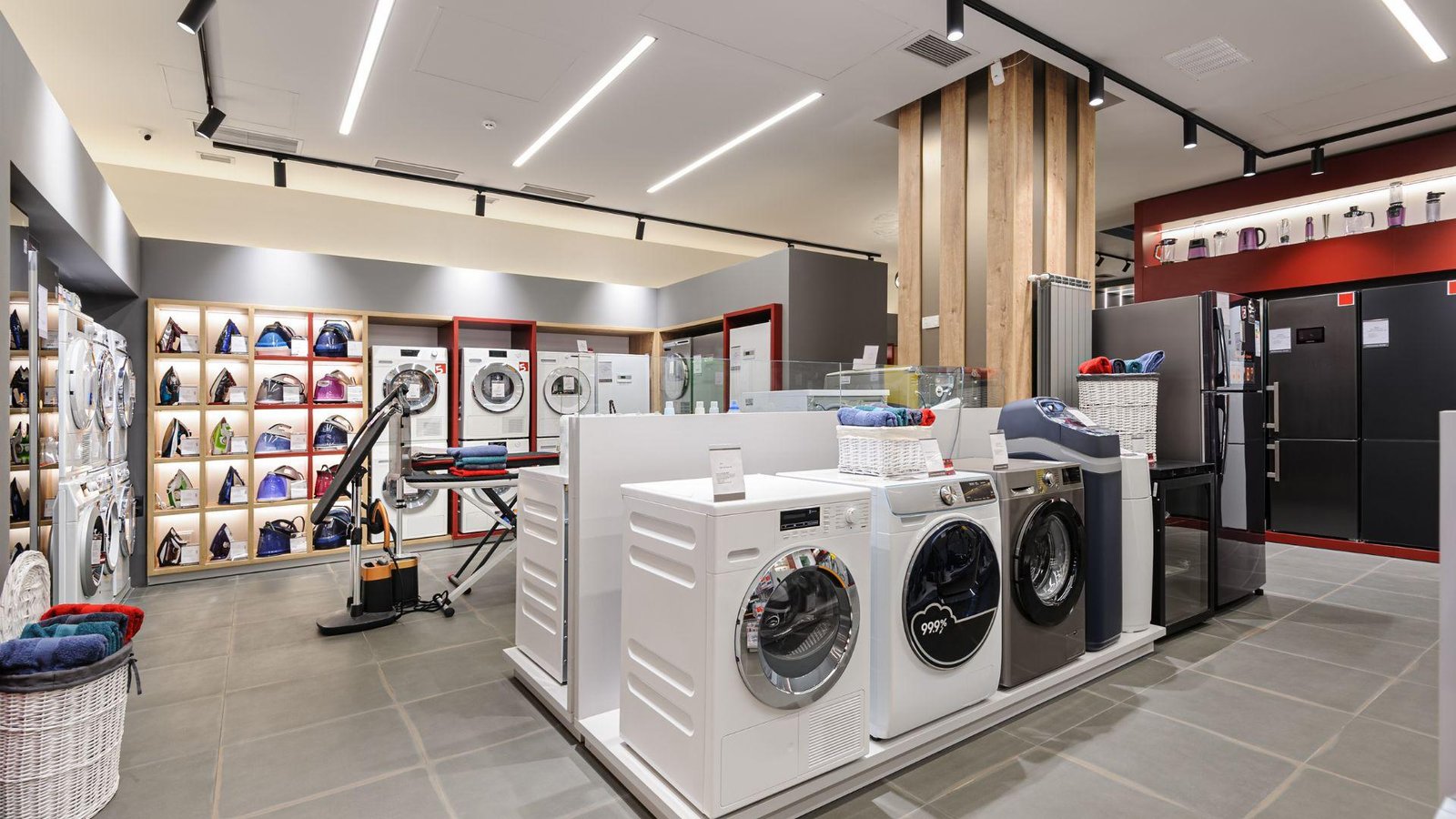
Japan Laundry Appliances Market Poised for Innovation-Led Growth Through 2033
Japan’s laundry appliances market is entering a new phase of transformation, driven by technological innovation, evolving consumer lifestyles, and demographic shifts. While the market is already mature with near-universal household penetration, industry players are increasingly focusing on value-driven growth through advanced features, energy efficiency, and smart connectivity.
According to Renub Research, Japan’s laundry appliances market is projected to grow from US$ 3.12 billion in 2024 to US$ 4.08 billion by 2033, expanding at a compound annual growth rate (CAGR) of 3.02% from 2025 to 2033 . This steady trajectory reflects a shift from volume expansion to innovation-led replacement demand.
Market Overview: A Mature Yet Dynamic Landscape
Japan’s laundry appliance industry stands as one of the most developed globally, characterized by high consumer expectations and strong technological integration. With household penetration rates between 95% and 100%, the market is largely saturated, leaving limited room for first-time purchases.
Instead, growth is being driven by replacement cycles and consumer upgrades to premium, feature-rich appliances. Japanese consumers prioritize durability, efficiency, and convenience, often investing in high-end models that align with their technologically advanced lifestyles.
Urban households increasingly favor front-loading washing machines due to their superior water and energy efficiency. Meanwhile, washer-dryer combinations are gaining popularity in compact living spaces, especially in densely populated cities like Tokyo and Osaka .
Urbanization and Compact Living Drive Product Innovation
One of the most influential factors shaping the market is Japan’s urban lifestyle. With a significant portion of the population living in small apartments, space-saving appliances have become essential rather than optional.
Manufacturers are responding by designing compact, multifunctional machines that do not compromise on performance. Washer-dryer combos, stackable units, and built-in appliances are increasingly common in urban homes. These products cater to young professionals and nuclear families seeking efficiency within limited space.
Additionally, noise reduction and vibration control technologies are becoming critical features, ensuring that appliances remain suitable for apartment living. The demand for sleek, minimalist designs that blend seamlessly into modern interiors is also on the rise.
Smart Technology and IoT Integration Transforming the Market
Japan’s reputation as a global leader in technology innovation is clearly reflected in its laundry appliances sector. The integration of smart features and Internet of Things (IoT) capabilities is significantly enhancing user experience and driving market growth.
Modern washing machines now come equipped with:
- AI-based load sensing
- Smartphone app control
- Automatic detergent dispensing
- Remote operation and monitoring
- Advanced fabric care modes
These features cater to tech-savvy consumers who value convenience and automation. Smart appliances also align with the broader trend of connected homes, where multiple devices operate seamlessly within a unified ecosystem.
Furthermore, innovations such as steam cleaning and allergy-removal cycles address growing hygiene concerns, particularly in a post-pandemic environment. These advancements not only improve functionality but also encourage consumers to upgrade existing appliances.
Energy Efficiency and Sustainability Take Center Stage
Environmental awareness is playing an increasingly important role in consumer purchasing decisions. Japanese consumers are highly conscious of energy consumption and environmental impact, prompting manufacturers to prioritize eco-friendly technologies.
Modern appliances are designed to minimize water and electricity usage while maintaining high performance. Features such as energy-efficient motors, optimized wash cycles, and recyclable materials are becoming standard across product lines.
Government regulations and sustainability goals are further accelerating this trend. As a result, brands that can effectively balance performance with environmental responsibility are gaining a competitive edge in the market.
Aging Population Reshaping Product Design
Japan’s aging population is another critical factor influencing the laundry appliances market. With a growing proportion of elderly consumers, there is increasing demand for user-friendly and accessible appliances.
Manufacturers are adapting by introducing features such as:
- Ergonomic loading designs
- Large, easy-to-read displays
- Simplified control panels
- Voice-assisted operation
- Automated cleaning and maintenance functions
These innovations reduce physical effort and make appliances more accessible to older users. At the same time, they enhance convenience for all consumer segments, reinforcing their appeal in a competitive market.
As Japan continues to age, inclusive product design will remain a key driver of innovation and growth.
Market Challenges: Saturation and Demographic Pressures
Despite its strengths, the Japan laundry appliances market faces several structural challenges. The most significant is market saturation. With nearly every household already owning a washing machine, growth opportunities are limited to replacement demand.
This creates intense competition among manufacturers, who must continuously innovate to differentiate their products. However, convincing consumers to replace functional appliances can be difficult, particularly given the long lifespan of Japanese products.
Additionally, Japan’s declining population presents a long-term challenge. Fewer households mean reduced demand for new appliances, particularly in rural areas. The shrinking working-age population also impacts manufacturing and service sectors, potentially increasing costs.
To navigate these challenges, companies must focus on value creation, targeting niche segments and leveraging advanced technologies to drive consumer interest.
Competitive Landscape: Strong Domestic Presence with Global Competition
The Japan laundry appliances market is highly competitive, dominated by established domestic players alongside growing international competition.
Leading companies include:
- Hitachi
- Panasonic
- Toshiba
- Sharp
These brands have built strong reputations for quality, reliability, and innovation. However, international players such as LG, Samsung, and Whirlpool are gaining traction with their advanced smart features and global expertise .
Competition is intensifying as both domestic and foreign brands invest in research and development to deliver differentiated products. Strategic partnerships, product innovation, and enhanced customer experiences are key strategies for maintaining market share.
Distribution Channels: Rise of E-Commerce and Omnichannel Retail
The distribution landscape is also evolving, with e-commerce playing an increasingly important role. While traditional channels such as specialty stores and department stores remain significant, online platforms are gaining popularity due to convenience and competitive pricing.
Consumers are increasingly researching products online before making purchasing decisions, highlighting the importance of digital presence and marketing strategies.
Omnichannel retail models, which integrate online and offline experiences, are becoming a key focus for manufacturers and retailers alike. This approach allows brands to provide seamless customer journeys, from product discovery to purchase and after-sales service.
Product Segmentation: Diverse Offerings for Varied Needs
The market is segmented across multiple dimensions, reflecting diverse consumer preferences:
By Type:
- Freestanding appliances
- Built-in appliances
By Product:
- Washing machines
- Dryers
- Electric smoothing irons
- Others
By Technology:
- Automatic
- Semi-automatic/manual
- Others
By Distribution Channel:
- Specialty stores
- Supermarkets and hypermarkets
- Department stores
- E-commerce
- Others
Among these, automatic washing machines dominate due to their convenience and advanced features, while e-commerce is emerging as a key growth channel.
Future Outlook: Innovation and Premiumization to Drive Growth
Looking ahead, the Japan laundry appliances market is expected to maintain steady growth, driven by innovation and premiumization. As consumers continue to prioritize convenience, efficiency, and sustainability, demand for advanced appliances will remain strong.
Key trends shaping the future include:
- Increased adoption of smart and connected appliances
- Growth in eco-friendly and energy-efficient products
- Expansion of compact and multifunctional designs
- Rising demand for user-friendly solutions for aging populations
While challenges such as market saturation and demographic decline persist, the industry’s focus on innovation and value creation positions it well for long-term resilience.
Final Thoughts
Japan’s laundry appliances market exemplifies how a mature industry can continue to evolve through innovation and adaptability. With strong technological capabilities, changing consumer preferences, and a focus on sustainability, the market is transitioning from volume-driven growth to value-driven expansion.
Renub Research’s forecast underscores this shift, highlighting steady growth through 2033 despite structural challenges. As manufacturers continue to invest in smart technologies, eco-friendly solutions, and inclusive designs, the market is set to remain competitive, dynamic, and aligned with the needs of modern consumers.
In a landscape where differentiation is key, the ability to combine innovation with practicality will determine the next wave of success in Japan’s laundry appliances industry.

 Arabic
 French
 Spanish
 Portuguese
 Deutsch
 Turkish
 Dutch
Dutch
 Italiano
 Russian
 Romaian
 Portuguese (Brazil)
 Greek
Greek