



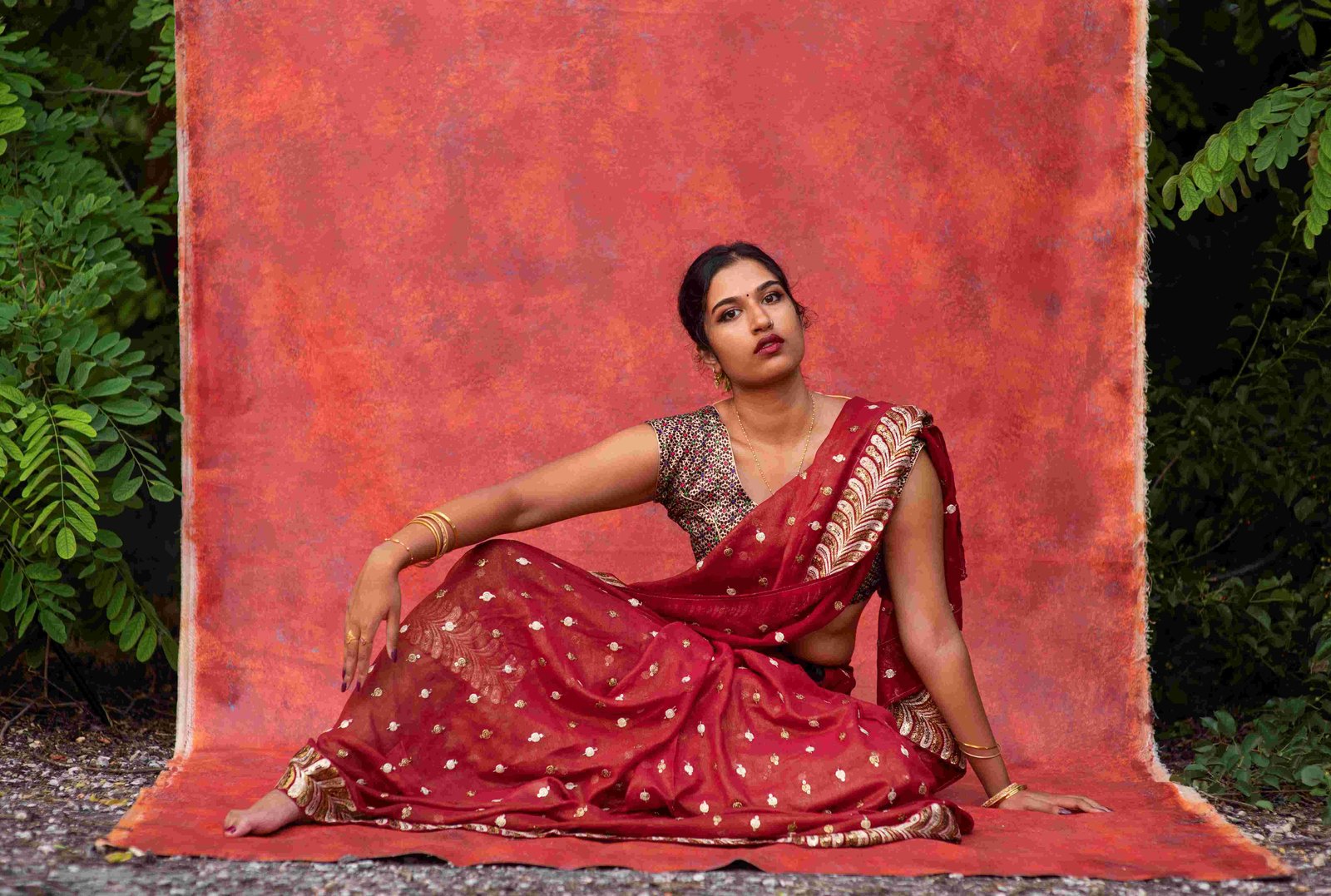
In the world of Indian bridal fashion, few garments command the same reverence, desire, and cultural significance as the bridal Kanchipuram saree. Originating from the ancient temple town of Kanchipuram in Tamil Nadu, these sarees are celebrated worldwide for their extraordinary quality, their rich symbolic imagery, and their magnificent zari work. For brides across South India and beyond, wearing a bridal Kanchipuram saree is not merely a fashion choice but a deeply meaningful cultural tradition.
The Ancient Town of Kanchipuram and Its Weaving Heritage
Kanchipuram, often called the 'City of Thousand Temples,' has been a center of silk weaving excellence for over four hundred years. The town's weaving tradition is believed to have been established by master weavers who were brought from other parts of India during the reign of the Vijayanagara Empire. Over the centuries, Kanchipuram weavers developed their own distinctive style, characterized by the use of heavy-weight mulberry silk, pure gold and silver zari, and complex temple-inspired motifs that set their work apart from all other Indian silk traditions.
Today, Kanchipuram has approximately twenty thousand families engaged in silk weaving, and the industry is recognized as both an economic mainstay of the region and a cultural institution of national importance. The Government of India has granted Kanchipuram silk a Geographical Indication (GI) tag, which means that only sarees produced in the specific region using the traditional methods can legally bear the Kanchipuram name. This protection helps ensure the integrity and authenticity of a tradition that has been refined over centuries.
Temple Borders: A Defining Feature of Bridal Kanchipuram Sarees
Among the many spectacular features of bridal Kanchipuram sarees, the temple border stands out as perhaps the most iconic and instantly recognizable. Temple borders, known as 'kovil border' in Tamil, feature repeating architectural motifs inspired by the gopurams (towering gateway structures) of South Indian temples. These motifs include stylized representations of temple towers, deity figures, sacred lamps, lotus flowers, and elephants, all rendered with extraordinary detail and precision.
The temple border typically runs along the length of the saree on both edges and is woven as a separate piece from the main body of the saree. The contrast between the border and the body is a hallmark of Kanchipuram design, with weavers often choosing dramatically different colors for each section to create a striking visual effect. For bridal Kanchipuram sarees, the border is usually heavier, more elaborate, and more richly embellished than those found on everyday Kanchipuram sarees, befitting the grandeur of the wedding occasion.
The Magnificence of Zari Work in Kanchipuram Sarees
Zari, the metallic thread used in Kanchipuram weaving, is one of the most important elements that defines the character and value of these sarees. Traditionally, pure gold and silver zari was used, which gave Kanchipuram sarees a literally precious quality. The zari threads used in authentic Kanchipuram sarees consist of a fine silver wire wrapped around a silk core and then coated with real gold through an electroplating process.
The amount of zari used in a saree directly affects its weight, its cost, and its visual impact. Bridal Kanchipuram sarees tend to use the heaviest zari work, with elaborate patterns covering large portions of the saree's body and pallu. The pallu, or the decorative end piece that drapes over the shoulder, is often the most heavily embellished section, featuring large, complex motifs that showcase the weaver's highest level of skill. Common zari patterns include peacocks, swans, elephants, horses, floral vines, and geometric lattices.
Choosing the Perfect Bridal Kanchipuram Saree
Selecting a bridal Kanchipuram saree is a momentous decision that many South Indian families take extremely seriously. The process often involves visiting multiple shops or weaver workshops, examining dozens of sarees, and consulting with family members and style advisors before making a final choice. Bridal Kanchipuram sarees come in a vast range of colors, designs, and price points, so having a clear sense of one's preferences and budget before shopping is helpful.
Traditional bridal colors for Kanchipuram sarees include red, which is considered the most auspicious color for South Indian Hindu weddings, as well as deep green, purple, and orange. However, contemporary brides are increasingly choosing lighter shades such as blush pink, ivory, and pale gold for their wedding day, particularly for reception events where Western-influenced aesthetics have become more prevalent. The key is to choose a color that the bride feels beautiful and confident in.
The Pallu: A Canvas for Masterpiece Weaving
The pallu of a bridal Kanchipuram saree is the section that receives the most attention from weavers and from admirers alike. In traditional Kanchipuram weaving, the pallu is woven separately from the body of the saree using a different set of threads, then attached to the main fabric through an extremely fine seam. This construction method allows for even greater complexity and contrast in the pallu design.
For bridal sarees, pallu designs often feature elaborate narrative scenes from Hindu mythology, such as the story of Radha and Krishna, the depiction of the ten avatars of Vishnu, or scenes from the Ramayana. These narrative pallus, known as 'puranavastram' in Sanskrit, are considered particularly auspicious for brides and are treasured not only for their beauty but also for their sacred symbolism. The weaving of such a pallu can take a single master weaver several weeks to complete.
Caring for Bridal Kanchipuram Sarees
Given the significant investment that a bridal Kanchipuram saree represents, both financially and emotionally, proper care is essential. After the wedding, the saree should be dry cleaned by a specialist who has experience handling silk with heavy zari work. The zari should be carefully inspected for any tarnishing, and if necessary, professionally cleaned to restore its luster. The saree should then be wrapped in a clean, unbleached cotton cloth and stored in a cool, dry environment.
Many families keep their bridal Kanchipuram sarees in specially designed wooden chests lined with cedar, which helps maintain the right humidity level and protects against moths. Periodic airing of the saree, away from direct sunlight, helps prevent any musty odors from developing. With proper care, a bridal Kanchipuram saree can remain in perfect condition for decades, ready to be worn again on special anniversaries or to be passed down to the next generation of brides in the family.
Bridal Kanchipuram sarees represent one of the greatest achievements of Indian textile artistry. Their temple borders speak of ancient devotion, their zari work dazzles with metallic magnificence, and their sheer weight and presence communicate the gravity of the occasion they are created for. For any bride who chooses to wear one, a bridal Kanchipuram saree is more than a wedding outfit; it is a connection to a four-hundred-year tradition of excellence and a garment that will remain beautiful for generations to come.

 English
 Arabic
 French
 Spanish
 Portuguese
 Deutsch
 Dutch
Dutch
 Italiano
 Russian
 Romaian
 Portuguese (Brazil)
 Greek
Greek