



Explore How Algorithms Recalculate Authority After Link Disavowal
In the world of SEO, backlinks are a cornerstone of website authority. However, not all backlinks are beneficial. Toxic or spammy links can hurt a website’s rankings and diminish its credibility in the eyes of search engines. That’s where the process of link disavowal becomes crucial. But many website owners wonder: what exactly happens when links are disavowed? How do search engine algorithms recalculate authority afterward? Understanding this process is essential for anyone serious about protecting and improving their SEO.
What Is Link Disavowal?
Link disavowal is the act of telling search engines not to consider certain backlinks when evaluating your website. Google provides a Disavow Tool that allows webmasters to submit a list of URLs or domains they believe are harmful. Disavowing links does not remove them from the web but ensures that Google does not count them toward your site’s authority.
From my experience working with clients across industries, disavowal is often misunderstood. Many businesses fear that disavowing links will immediately boost their rankings. In reality, disavowal is a protective measure, designed to prevent penalties and maintain a healthy backlink profile.
Why Disavowal Is Important
Not all backlinks are created equal. High-quality, relevant backlinks enhance your site’s authority, improving search engine rankings. Conversely, links from spammy websites, link farms, or irrelevant niches can harm your website. These harmful links may trigger algorithmic penalties, such as Google’s Penguin updates, which are designed to filter out manipulative or unnatural linking practices.
Disavowing such links ensures that your website is not penalized for connections you cannot control. It is particularly important for sites that have experienced negative SEO attacks or have previously purchased backlinks that violated Google’s guidelines.
How Search Engine Algorithms Recalculate Authority
When you submit a disavow file, search engines like Google must recalculate your website’s authority by excluding the influence of disavowed links. This recalculation is complex and involves several key steps:
1. Identification of Disavowed Links
Once your disavow file is processed, the algorithm identifies the URLs or domains listed and flags them as "ignored" for authority calculations. Essentially, the algorithm removes any value these links may have contributed, whether positive or negative.
2. Adjustment of Link Equity
Link equity, sometimes referred to as “link juice,” is the value passed from one site to another via backlinks. When a toxic link is disavowed, its influence on link equity is nullified. This prevents the site from losing authority due to low-quality or spammy sources and ensures that only legitimate backlinks contribute to ranking power.
3. Reevaluation of Domain Authority
Search engines then recalculate your website’s overall authority by evaluating the remaining active backlinks. This process is dynamic and considers the quality, relevance, and diversity of your backlink profile. Over time, sites with clean, high-quality backlinks tend to regain or improve authority.
4. Gradual Ranking Adjustments
It’s important to note that changes in authority and rankings are not immediate. Algorithms periodically recrawl your site and its backlinks, integrating the disavowal into their evaluation. Depending on the number of disavowed links and the overall backlink profile, it may take weeks or even months to see noticeable improvements in search rankings.
Factors Affecting Authority Recalculation
Several factors influence how effectively authority is recalculated after link disavowal:
-
Number of Disavowed Links: A small number of low-quality links may have minimal impact, while a large-scale disavowal can significantly change your backlink profile.
-
Quality of Remaining Backlinks: The authority of your site after disavowal depends heavily on the quality of your remaining backlinks. High-authority, relevant links help maintain or boost rankings.
-
Frequency of Crawls: Search engines must recrawl your site and backlinks for the recalculation to take effect. Sites crawled more frequently see changes sooner.
-
Historical Link Patterns: If your site has a history of unnatural linking practices, the algorithm may apply additional scrutiny when recalculating authority.
Common Misconceptions About Disavowal
Many website owners have misunderstandings regarding disavowal:
-
Immediate Ranking Boost: Some expect rankings to jump instantly. In reality, disavowal is preventive and often results in gradual improvement.
-
All Low-Quality Links Must Be Disavowed: Not every low-value link needs disavowal. Google often ignores harmless links automatically.
-
Disavowal Removes Links: Disavowal does not delete links from the web; it merely instructs Google to disregard them in ranking calculations.
Understanding these nuances is key to using the disavow tool effectively. Misuse can inadvertently harm your SEO instead of protecting it.
Personal Perspective: Why Algorithm Understanding Matters
From my experience helping businesses recover from link-related penalties, the biggest challenge is patience. Many clients panic when toxic backlinks are discovered, expecting instant results. However, understanding how algorithms recalculate authority helps set realistic expectations.
Algorithms evaluate not only the disavowed links but also your remaining backlink ecosystem. This means focusing on building high-quality, relevant backlinks alongside disavowal efforts is essential for sustainable SEO recovery. Over time, these strategic actions help restore trust and authority in the eyes of search engines.
Best Practices for Managing Link Disavowal
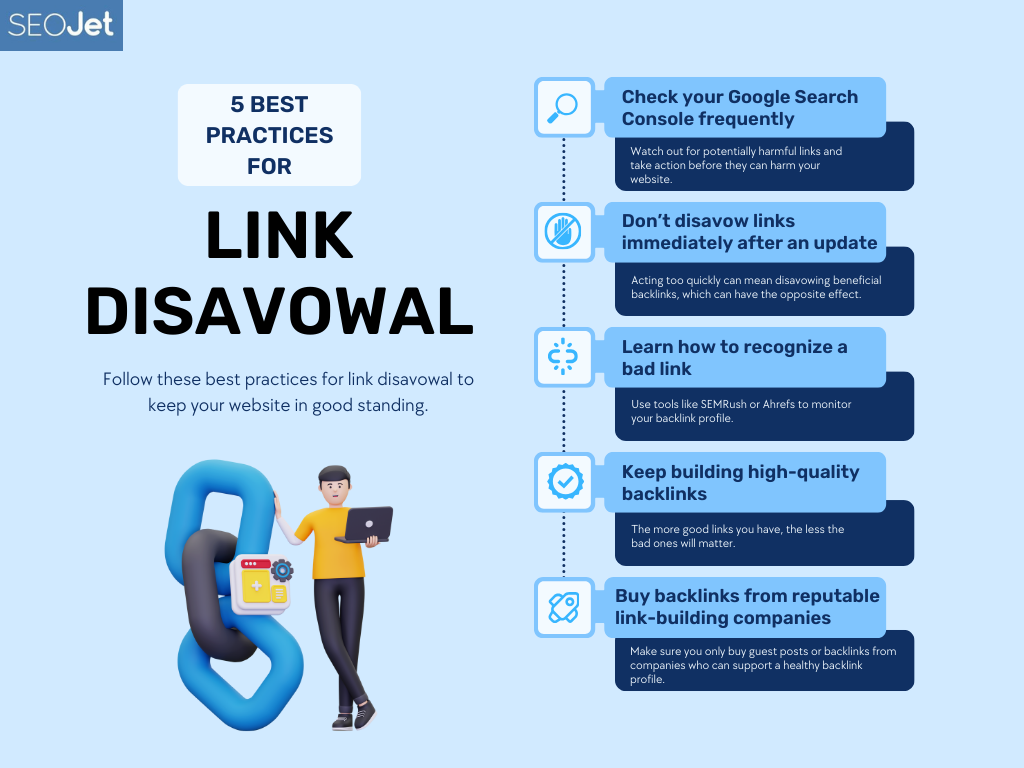
To ensure that disavowal has the desired effect, consider the following best practices:
-
Audit Your Backlink Profile Regularly: Use tools like Ahrefs, SEMrush, or Google Search Console to identify harmful links.
-
Prioritize Toxic Links: Focus on links that violate Google’s guidelines or are highly spammy.
-
Keep Disavow File Organized: Maintain clear documentation of all URLs or domains you disavow to track progress and avoid errors.
-
Combine with Positive Link Building: Strengthen your backlink profile with high-quality, authoritative links to offset the impact of disavowed links.
-
Monitor Rankings and Authority Metrics: Track improvements using domain authority, organic traffic, and keyword rankings to measure the effectiveness of disavowal.
Many businesses also collaborate with professional agencies to manage these processes effectively. Working with the Best SEO Agencies ensures that disavowal is executed accurately and strategically, protecting your website’s authority and long-term SEO performance.
The Role of Algorithms in Long-Term SEO Strategy
Disavowal is not a one-time solution. Algorithms continually evolve, and competitors may employ tactics that indirectly affect your site. By understanding how authority is recalculated, businesses can develop a proactive SEO strategy that anticipates potential threats.
A healthy, diversified backlink profile, coupled with periodic disavowal of harmful links, keeps your site resilient against algorithmic changes. This approach ensures that your website maintains visibility, credibility, and sustainable traffic growth over time.
Case Study: Recovering Authority After Disavowal
I worked with a client who suffered from a negative SEO attack where competitors built hundreds of spammy backlinks to their site. Their traffic dropped, and rankings suffered. We audited the backlink profile, disavowed the harmful links, and focused on building high-quality backlinks. Over the next three months, algorithms gradually recalculated authority, and their rankings improved steadily.
This example illustrates the importance of patience and strategy. Disavowal alone doesn’t immediately restore authority; it requires careful monitoring and proactive SEO efforts to maximize results.
Conclusion
Understanding how algorithms recalculate authority after link disavowal is critical for any website owner serious about SEO. Disavowal protects your website from harmful backlinks, but it is the combination of disavowal, quality link-building, and strategic SEO that ensures long-term success.
Disavowal is a tool of prevention, authority protection, and strategy. It highlights the dynamic nature of SEO, where continuous monitoring, adaptation, and understanding of algorithms are essential for sustained success.
FAQs (Frequently Asked Questions)
What happens immediately after submitting a disavow file?
Once submitted, Google marks the listed URLs or domains as ignored for ranking calculations. The process does not remove the links from the web but signals to the algorithm that they should not influence your site’s authority. Changes in rankings may take weeks or months.
How does link disavowal affect domain authority?
Disavowal prevents toxic or spammy links from harming your domain authority. Algorithms recalculate link equity by ignoring the disavowed links, ensuring that only legitimate, high-quality backlinks contribute to your site’s authority.
Can disavowing links guarantee higher rankings?
Disavowal alone does not guarantee immediate ranking improvements. It is a protective measure. Ranking recovery occurs gradually as the algorithm recalculates authority, particularly when combined with positive SEO strategies and high-quality backlink acquisition.
How long does it take for algorithms to recalculate authority?
The timeline varies depending on the number of links, crawl frequency, and overall backlink profile. Typically, it can take several weeks to months for search engines to fully integrate the disavowal and adjust your website’s authority in rankings.
Should small businesses worry about link disavowal?
Yes, even small businesses benefit from managing backlinks proactively. Disavowing harmful links protects site authority and ensures that their SEO efforts are not undermined, allowing small sites to maintain visibility and compete effectively in search results.
Can a website with low Domain Authority outrank high-DA sites?
Yes, a website with lower Domain Authority can outrank higher-DA sites if it has better content relevance, optimized on-page SEO, superior user experience, and strong keyword targeting. DA is a metric, not a direct ranking factor, so quality and context often matter more.
How reliable is Domain Authority as a predictor of Google rankings?
Domain Authority is a useful metric for estimating a site’s backlink strength and competitive potential, but it does not guarantee rankings. Google considers hundreds of factors, including content quality, relevance, user engagement, and page-level SEO, beyond DA alone.
Should I focus on improving Domain Authority to rank higher?
Improving DA can help indirectly by attracting higher-quality backlinks and increasing credibility, but ranking success depends on a holistic SEO strategy. Content optimization, technical SEO, site performance, and user intent alignment are equally or more critical than DA.
Does DA affect local search rankings?
Domain Authority has minimal direct impact on local SEO. Google’s local rankings rely more on factors like Google Business Profile optimization, local citations, reviews, and proximity. High DA may help with broader search visibility but doesn’t guarantee local search dominance.
How often does Domain Authority change and does it impact rankings immediately?
DA is recalculated periodically by SEO tools like Moz and can fluctuate due to changes in backlinks and competitor performance. These changes are not instant and do not directly influence Google rankings, as DA is an external metric rather than an official ranking factor.

 Arabic
 French
 Spanish
 Portuguese
 Deutsch
 Turkish
 Dutch
Dutch
 Italiano
 Russian
 Romaian
 Portuguese (Brazil)
 Greek
Greek