



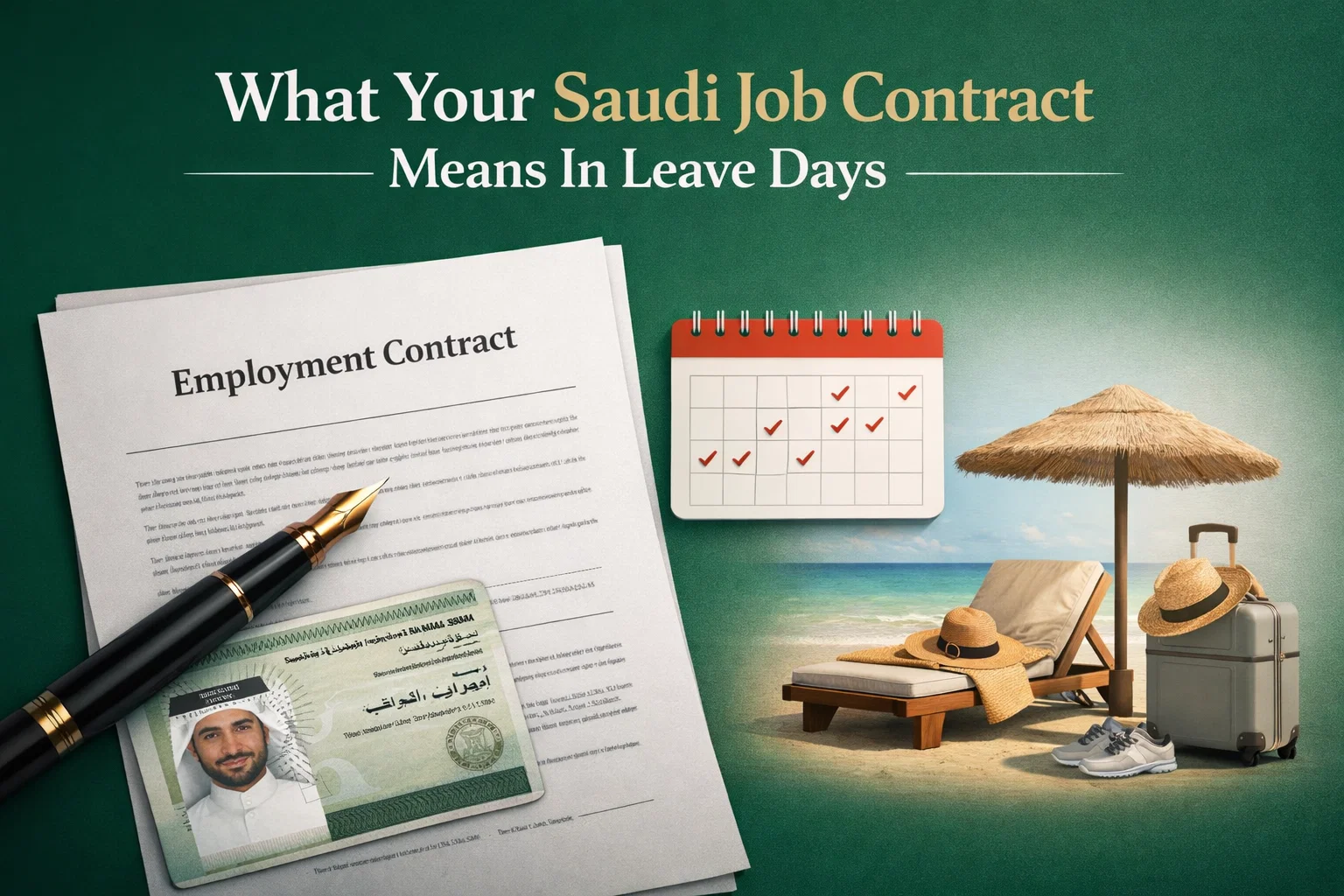
Can you imagine the frustration of planning a much-needed trip home, only to discover your leave balance is lower than you expected? What if you realized that your contract and the law aren't quite on the same page regarding your time off? Navigating the complexities of employment rights in the Kingdom often leads to confusion, especially when it comes to the numbers. In this detailed article, we provide a clear solution to these headaches by explaining exactly how to determine your entitlements so you never lose a day of rest.
The Reality of Annual Leave Entitlement
Many employees in Saudi Arabia struggle to understand why some colleagues receive more time off than others. Under the Saudi Labor Law, specifically Article 109, your leave days are not just a fixed number but a growing benefit based on your loyalty to the company.
For the first five years of continuous service, the law mandates a minimum of 21 days of paid leave. Once you cross that five-year milestone with the same employer, your entitlement automatically bumps up to 30 days. This shift is a significant reward for long-term commitment and is something every worker should monitor closely.
Decoding the Annual Leave Calculator Logic
To ensure you are getting every riyal and day you deserve, you must understand the basic math behind a standard annual leave calculator. The calculation isn't based on working days alone; it is typically calculated using calendar days, which includes weekends that fall within your leave period.
-
Daily Wage Calculation:
Divide your total monthly wage (Basic + Housing + Transport) by 30. -
Accrual Rate:
For those on the 21-day plan, you earn roughly 1.75 days per month. -
Long-term Accrual:
For those on the 30-day plan, you earn 2.5 days per month.
Knowing these rates helps you verify your balance on HR portals like Qiwa or internal company systems. If you notice a discrepancy, having this formula ready allows you to have a factual conversation with your HR department.
When Can You Actually Take Your Leave?
While you earn your leave days every month, the timing of when you take them is often a point of contention. The employer has the right to schedule leaves according to work requirements, but they must give you at least 30 days' notice before the start date.
Furthermore, you cannot be denied your leave indefinitely. The law ensures that you must take your leave in the year it is due. While you can postpone it to the next year with written consent, it cannot be delayed forever, protecting your right to rest and recuperation.
Important Rules to Remember
Beyond the standard vacation days, there are specific conditions that can change how your leave is handled. Understanding these nuances can prevent you from losing money or facing legal issues at work.
-
Public Holidays:
If Eid or National Day falls during your vacation, these days should not be subtracted from your annual leave balance. -
Payment in Advance:
You are entitled to receive your vacation salary before you actually start your leave. -
Unused Leave Payout:
If you leave your job, any remaining balance must be paid out based on your current actual wage. -
Sick Leave Interaction:
You cannot be fired while on official annual leave, even if you fall ill during that period.
Using Technology for Accuracy
In 2026, relying on manual guestimates is no longer necessary. Most modern firms in the Kingdom now use digital tools to track attendance and leave. However, as an employee, you should still keep your own records of days taken and days earned.
By comparing your personal log with an official annual leave calculator, you can catch errors early. This transparency is the best way to ensure that your contract is being honored and that your actual days off match the legal days promised to you.

 English
 Arabic
 French
 Spanish
 Portuguese
 Turkish
 Dutch
Dutch
 Italiano
 Russian
 Romaian
 Portuguese (Brazil)
 Greek
Greek