



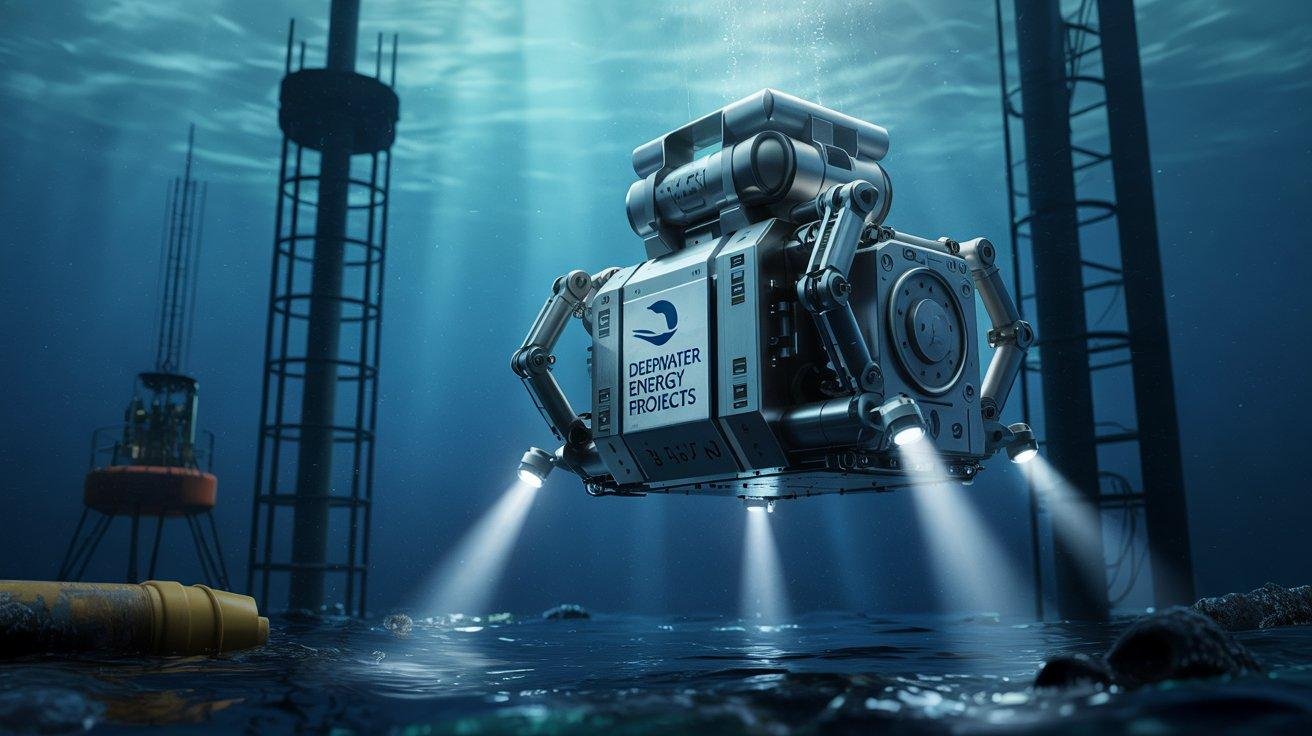
Deepwater energy exploration has always pushed the limits of engineering and technology. As offshore oil, gas, and renewable energy projects move into deeper and harsher ocean environments, traditional human diving operations are no longer practical or safe. This is where subsea robotics has become indispensable. Remotely Operated Vehicles (ROVs) are now the backbone of deepwater operations, enabling engineers to inspect, construct, repair, and monitor infrastructure thousands of metres beneath the ocean’s surface.
Over the past decade, technological advances in robotics, sensors, artificial intelligence, and materials science have significantly enhanced the performance of ROVs. These innovations allow operators to carry out complex underwater tasks with greater precision, reliability, and safety. As energy companies continue expanding offshore projects, the evolution of ROV technology is playing a crucial role in ensuring efficiency, environmental protection, and operational success.
The Growing Importance of ROVs in Deepwater Projects
Deepwater energy projects involve extremely challenging conditions such as high pressure, low temperatures, and limited visibility. Human divers can only operate safely at relatively shallow depths, which makes robotic solutions essential for deeper environments.
ROVs serve as the “eyes and hands” of offshore engineers. Controlled from support vessels on the surface, these vehicles can travel thousands of meters underwater while transmitting real-time video, sensor data, and operational feedback. This capability allows engineers to inspect subsea pipelines, repair equipment, and support offshore construction without exposing personnel to dangerous conditions.
The growing complexity of offshore energy infrastructure has further increased reliance on advanced subsea ROV systems. Modern vehicles are equipped with precision manipulators, high-definition cameras, sonar imaging, and advanced navigation systems. These technologies enable ROVs to complete intricate tasks such as valve operations, equipment installation, and structural inspections with remarkable accuracy.
Improved Navigation and Positioning Technologies
One of the most significant improvements in modern ROVs is the development of advanced navigation and positioning systems. Operating in deep water often means working in environments where GPS signals cannot reach, making accurate positioning a technical challenge.
To solve this problem, modern ROVs use acoustic positioning systems, inertial navigation sensors, and Doppler velocity logs. These technologies work together to calculate the vehicle’s position relative to subsea structures and the support vessel above. With improved navigation capabilities, ROV operators can maintain stable positioning even in strong underwater currents.
Enhanced positioning accuracy allows engineers to conduct delicate tasks such as connecting subsea pipelines or installing equipment modules. The result is improved operational efficiency and reduced risk of damage to expensive offshore infrastructure.
High-Definition Imaging and Advanced Sensors
Another major advancement in subsea ROV technology is the improvement of imaging systems. Early ROVs relied on basic cameras that struggled in dark and murky underwater conditions. Today’s vehicles are equipped with high-definition cameras, powerful LED lighting systems, and advanced sonar technologies.
These innovations allow operators to see underwater environments with exceptional clarity. Multibeam sonar and imaging sonar can create detailed visual maps of subsea structures even when visibility is extremely poor. This capability is especially valuable during inspections, maintenance operations, and environmental monitoring.
Advanced sensors also allow ROVs to measure temperature, pressure, chemical composition, and structural integrity of subsea equipment. By collecting this data in real time, engineers can identify potential issues before they become serious problems. This proactive approach reduces downtime and enhances the safety of offshore operations.
Robotic Manipulation and Precision Tools
Modern ROVs are far more than remote cameras. They are sophisticated robotic systems capable of performing highly technical mechanical tasks underwater. Equipped with articulated robotic arms and specialised tools, ROVs can manipulate equipment with impressive precision.
These manipulators allow operators to tighten bolts, operate valves, cut cables, or install subsea components. Some vehicles are equipped with interchangeable tool packages designed for specific operations such as pipeline intervention, drilling support, or cable installation.
Improved robotic control systems have also made it easier for operators to perform delicate procedures. Advanced control algorithms translate operator movements into precise robotic actions, allowing for smoother and more accurate manipulation of subsea equipment.
Artificial Intelligence and Automation
Artificial intelligence is beginning to transform the way ROVs operate in deepwater environments. Traditional ROVs require constant human control, but newer systems incorporate semi-autonomous capabilities that reduce operator workload.
AI-powered navigation systems can help vehicles avoid obstacles, maintain stable positioning, and follow predefined inspection routes automatically. Machine learning algorithms can also analyse visual data from cameras and sensors to detect corrosion, cracks, or structural damage on subsea equipment.
Automation does not replace human operators but enhances their capabilities. By allowing ROVs to perform routine inspection tasks automatically, engineers can focus on more complex operational decisions. This combination of human expertise and machine intelligence is improving the efficiency of offshore operations.
Supporting Offshore Renewable Energy
While ROVs have long been associated with oil and gas exploration, they are now playing an important role in offshore renewable energy projects as well. The global expansion of offshore wind farms and subsea power transmission systems has created new demands for underwater robotics.
ROVs are used to inspect subsea cables, monitor turbine foundations, and assist with installation activities in offshore wind projects. Their ability to operate in deep water and harsh conditions makes them essential tools for maintaining renewable energy infrastructure.
As offshore renewable energy continues to grow, the demand for advanced robotic inspection and maintenance solutions will likely increase. ROV technology is helping ensure that these clean energy systems operate reliably and efficiently over long periods.
Enhancing Safety and Reducing Operational Risk
One of the greatest benefits of modern subsea robotics is the significant improvement in offshore safety. Deepwater energy projects involve complex equipment and hazardous environments where accidents can have serious consequences.
ROVs reduce the need for human divers and allow dangerous tasks to be performed remotely. This reduces the risk of injury while also enabling operations to continue in conditions that would otherwise be unsafe for personnel.
By providing real-time monitoring and detailed inspection capabilities, ROVs also help identify potential problems early. Detecting structural issues or equipment failures before they escalate can prevent costly downtime and environmental incidents.
Data Integration and Digital Offshore Operations
Another emerging trend in subsea technology is the integration of ROV data with digital offshore management systems. Modern ROVs generate enormous amounts of visual and sensor data during operations.
This data can now be integrated into digital twin models of offshore infrastructure. Engineers onshore can analyse inspection results, monitor asset conditions, and plan maintenance activities using highly detailed digital representations of subsea systems.
Cloud-based platforms and advanced analytics tools allow energy companies to store and analyse this data more effectively. The result is improved decision-making, predictive maintenance strategies, and greater operational efficiency.
The Future of Subsea ROV Technology
Looking ahead, the future of ROV technology appears highly promising. Engineers and robotics developers are continuously exploring new ways to improve vehicle performance, reliability, and efficiency.
One area of innovation is hybrid robotic systems that combine features of ROVs and autonomous underwater vehicles (AUVs). These hybrid platforms can perform long-distance surveys autonomously and then switch to remote control for complex intervention tasks.
Another promising development is the use of lighter materials and improved power systems. Advances in battery technology and energy-efficient propulsion systems may allow future vehicles to operate longer without requiring surface support.
In addition, improvements in artificial intelligence and machine vision will likely enhance the ability of subsea robots to perform complex tasks with minimal human intervention. This evolution could transform the way deepwater energy projects are managed in the coming decades.
Conclusion
Deepwater energy development continues to challenge engineers with harsh environments and complex infrastructure. Advances in robotics have made it possible to safely explore, construct, and maintain subsea systems at depths that were once unreachable.
Modern ROVs now incorporate advanced navigation systems, high-resolution imaging, robotic manipulators, and intelligent automation. These technologies allow offshore teams to complete critical underwater operations with greater accuracy and efficiency.
As offshore energy projects expand and renewable energy infrastructure grows, subsea robotics will remain a cornerstone of underwater operations. Continued innovation in ROV technology will not only improve the efficiency of deepwater projects but also enhance safety, sustainability, and long-term operational success in the global energy sector.

 English
 Arabic
 French
 Spanish
 Portuguese
 Deutsch
 Turkish
 Dutch
Dutch
 Russian
 Romaian
 Portuguese (Brazil)
 Greek
Greek